David George Ritchie (1853-1903)
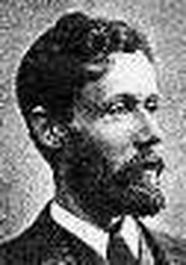
David George Ritchie was born at Jedburgh in the Scottish Borders on 26 October 1853. He was the only son of the three children of George Ritchie, D.D., minister of the parish and a man of scholarship and culture, who was elected to the office of moderator of the general assembly of the Church of Scotland in 1870. The family was connected with the family of Thomas Carlyle, a grandee of 19th century intellectual life, and in later years Ritchie edited a volume of Early Letters of Jane Welsh Carlyle.
Ritchie’s early schooling was at Jedburgh Academy. His upbringing was austere. He was forbidden to make friends of his own age, never learned to play games, and had his mind focused on largely intellectual subjects. In 1869 he went to Edinburgh University. His principal subject was Classics, studied under the famous classicist J S Blackie, but he also gained prizes in philosophy under the tuition of Alexander Campbell Fraser in Logic and Metaphysics and Henry Calderwood in Moral Philosophy. In every year he won prizes, graduating M.A. in 1875 with first-class honors in classics. After graduation Ritchie followed a long tradition of exceptional Scottish graduates by gaining a classical exhibition at Balliol College, Oxford. He attended lectures by Thomas Hill Green and Benjamin Jowett, the Master of Balliol famous for his translations of Plato. Once more, Ritchie was placed in the first-class (as was his more famous contemporary Oscar Wilde). After a brief spell of reading for the Bar, Ritchie was offered a fellowship at Jesus College where he became Tutor and Librarian in 1881. From 1882 to 1886 he was also a Classical Lecturer at Balliol College.
In 1882 Ritchie married Flora Lindsay, who died just six years later, leaving him with a daughter. In 1889 he married for a second time and with Ellen Haycraft he had a son.
Though he spent 20 years in Oxford, during which he published many papers and two books, Ritchie harbored a deep seated desire to return to Scotland, partly because the shorter teaching session there left more time for writing. But philosophical posts in Scotland were relatively few in number. After unsuccessful applications for Chairs in Aberdeen and Glasgow, he was appointed to the Chair of Logic and Metaphysics at the University of St. Andrews in 1894. Though his intellectual interests lay much more obviously in the area of Moral Philosophy, he was highly knowledgeable on a wide range of topics. “You may shake almost any branch of the tree of knowledge” a student wrote, “and you will find that he has tasted the fruit before you”. He remained at St. Andrews until his sudden and early death on 3 February 1903.
David George Ritchie wrote extensively, mostly on topics in ethics and political philosophy, though his appointment to a Chair of Logic and Metaphysics led him to publish on other topics also, notably Plato. He was an important contributor to the development of philosophy in Britain institutionally by being a founding member, and subsequently the third President (1898-1899), of the Aristotelian Society, an academic organization that quickly came to occupy a prestigious place in British philosophy. His intellectual influence was considerable in bringing Idealist metaphysics into conversation with the empiricist tradition, especially with respect to ethics and politics. He contributed to Essays in Philosophical Criticism, (1883) an influential Hegelian manifesto by a number of young philosophers sometimes referred to as the ‘Young Hegelians’, and his first two books -- Darwinism and Politics (1889) and The Principles of State Interference (1891) – took issue very effectively with the scientistic individualism of Herbert Spenser and others. Both books were well received, widely read, and reprinted several times. While at Oxford, he virtually completed work on what proved to be his major book. Natural Rights was published after he moved to St Andrews and remained in print long after his death. The book anticipated many later discussions of human and animal rights, but its larger significance lay in bringing to the topic a style of philosophy that blended empirical, conceptual and historical matter in just the way that subsequently became characteristic of the discipline known as political theory.
In 1998 Thoemmes Press published a six volume reprint of most of David George Ritchie’s work, but relatively little of it has come under renewed discussion.
Post-Enlightenment Philosophers
- Lady Mary Shepherd (1777-1847)
- Thomas Brown (1778-1820)
- Sir William Hamilton (1788-1856)
- Thomas Carlyle (1795-1881)
- James Frederick Ferrier (1808-1884)
- Alexander Bain (1818-1903)
- Alexander Campbell Fraser (1819-1914)
- James Hutcheson Stirling (1820-1909)
- John Veitch (1829-1894)
- Henry Calderwood (1830-1897)
- Edward Caird (1835-1908)
- Robert Flint (1838-1910)
- William Minto (1845-1893)
- Sir Henry Jones (1852-1922)
- David George Ritchie (1853-1903)
- Andrew Seth Pringle Pattison (1856-1931)
- James Seth (1860-1925)
- Robert Latta (1865-1932)
- Norman Kemp Smith (1872-1958)
- Archibald Allan Bowman (1883-1936)
- John Macmurray (1891-1976)
- C A Campbell (1897-1974)
- David Daiches Raphael (1916-2015)
- George Elder Davie (?)