Scottish Philosophy in Europe
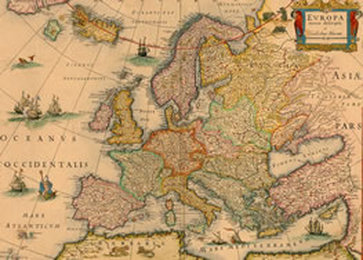
The origins of Scottish philosophy in Europe lie in the medieval period when all intellectual inquiry had an international rather than a national character. 'International' in this context meant European. Scotland long boasted an 'auld alliance' with France and it is with France that the earliest philosophical connections are to be found. In the late 13th century John Duns Scotus studied and lectured in Paris and Cologne. In the 15th century, leading figures in the foundation of Scotland's own universities -- notably Laurence of Lindores at St Andrews and Hector Boece at Aberdeen – had both studied and taught at the University of Paris. A century later, the French connection was still strong. The logicians John Mair and George Lokert moved easily, and surprisingly frequently, between France and the universities of St Andrews and Glasgow.
In the 17th century, the Protestant reformation shifted the relation of Scottish Philosophy in Europe. Intellectual connections with the Netherlands were more marked than those with France. The Dutch connection continued into the Enlightenment period with Francis Hutcheson but thereafter the old relationship with France was restored. Having completed his studies at Edinburgh University (of which he had a poor opinion) David Hume studied in France, and most of his greatest work -- The Treatise, of Human Nature – was completed at the Jesuit college of La Flache. Later in life he spent a further period in France as a Secretary at the British Embassy in Paris, and during this period he formed a brief and not entirely happy friendship with Jean Jacques Rousseau.
When Adam Smith resigned from the Chair of Moral Philosophy at Glasgow in 1763, he travelled extensively in France and Switzerland as personal tutor to the Duke of Buccleuch. His seminal work in economic theory -- The Wealth of Nations -- benefitted from the work of economists he met in France, notably Francois Quesnay (1694-1774) and Jacques Turgot (1727-81). Dugald Stewart made four extended journeys to France, the third to Paris in 1789 at the time of the French Revolution.
These connections with France, though interesting in themselves, do not demonstrate that the Scottish philosophers' investigations had any important influence there. In fact, it is easier to show the influence of Scottish philosophy in France at a slightly later stage. Stewart is normally identified as a late philosopher of the Scottish Enlightenment, but his works became reputable in France in the 19th not the 18th century, the Outlines of Moral Philosophy being translated by Theodore-Simon Jouffrey in 1827 right at the end of Stewart's life. This signalled a renewed interest among French philosophers in the philosophy of mind, and Stewart's own Europe-wide intellectual reputation did much to further this. The 'Philosophie Ecossaise' was taken up enthusiastically by Victor Cousin (1792-1867), though Cousin's eclecticism managed to combine interest in the Common Sense School of Thomas Reid with many other philosophical currents.
Adam Ferguson and Adam Smith were more influential in Germany than in France. Ferguson's works were translated into German at an early stage, and taken up with enthusiasm by protagonists of Germany's 'Enlightenment', though the quality of the translations made his work imperfectly understood, and in any case interest was always higher in the social science dimension of Scottish philosophy rather than the philosophy of mind. It was German philosophers who first formulated 'the problem' of reconciling Adam Smith's appeal to human sympathy in his moral philosophy, with his invocation of 'the invisible hand' that coordinates egoistical interests – a matter whose 'problematic' nature has subsequently been questioned.