James McCosh (1811–1894)
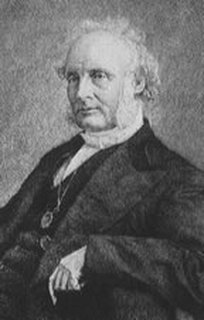
James McCosh was born in Ayrshire. He was a student at the University of Glasgow but then transferred to Edinburgh University, and though he spent less time studying there, it was from Edinburgh rather than Glasgow that he graduated M.A. -- on the recommendation of Sir William Hamilton who had been impressed by McCosh’s essay by on stoicism.
Like many philosophy graduates of his generation, McCosh entered the church. In 1834 he became a Church of Scotland minister in the east of Scotland, first at Arbroath -- site of the famous ‘Declaration of Arbroath’ a letter submitted to Pope John XXII in 1320 that set out to confirm Scotland's status as an independent, sovereign state – and then at Brechin, one of Scotland’s oldest ecclesiastical centers. In the Disruption of 1843 which split the established church, McCosh sided with the Free Church, and became minister of the new East Free Church in Brechin. In the years that followed, he was nationally prominent in the Free Church, and hugely successful locally in building up his new congregation. But he also found time to engage in serious philosophical writing, and on the strength of this, in 1850 he was appointed Professor of Logic and Metaphysics at the new Queen's College, Belfast (now Queen's University Belfast), a position (as its title suggests) closely modeled on Scottish precedent.
In 1868 James McCosh was offered and accepted the Presidency of the College of New Jersey in the United States of America (now Princeton University). In his move to Princeton, McCosh was following closely in the footsteps of John Witherspoon, another Glasgow educated, philosophically trained Presbyterian minister who had accepted the same position a century earlier. During his Presidency, McCosh laid the foundations of the world class university that subsequently emerged. He was active and effective in both securing new resources and in reforming the curriculum, and served as a Director of the theological Seminary that the College had spawned in 1812. After twenty years in post he resigned the presidency, but continued to teach philosophy until his death.
McCosh differed from many of his contemporaries in being relatively uninfluenced by Kant. He was a ‘Scottish’ philosopher not only by training, but by his adherence to the tradition of Thomas Reid and other Scottish common-sense philosophers and his self-conscious articulation of that tradition. In 1875 he gave that tradition a more general self-consciousness and a higher profile by the publication of his book The Scottish Philosophy, -- a chronologically order encyclopedia of forty seven Scottish philosophers both major and minor. By using the term ‘Scottish philosophy’ (rather than ‘School of Common Sense’) McCosh established the intellectual agenda for later similar works – notably Scottish Philosophy by Andrew Seth (1885) and Scottish Philosophy in its National Development, by Henry Laurie (1902).
McCosh's own most original work concerned the attempt to reconcile evolution and Christian beliefs. He argued that evolution, far from being inconsistent with belief in divine design, glorifies the divine designer. This aspect of his work found popularity among evangelical clergy, who found his arguments useful in their attempts to cope with scientific philosophy.
Scottish Philosophy Abroad
- Frances Wayland (1796-1865)
- Lyman H. Atwater (1811-1883)
- Francis Bowen (1811-1890)
- Noah Porter (1811-1894)
- James McCosh (1811–1894)