Dugald Stewart (1753-1828)
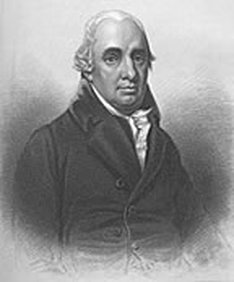
Dugald Stewart was born in Edinburgh on 22 November 1753 and died there on 11 June 1828. Though he was a student of Adam Ferguson in Edinburgh, he spent the year 1771-2 listening to Thomas Reid in Glasgow, and it was Reid rather than Ferguson who was crucial to his philosophical development.
From an early age, Stewart showed the kind of brilliance typical to a polymath. Though his interests lay in philosophy, his gift for mathematics led to his being appointed, at the age of 25, Professor of Mathematics at Edinburgh. He held this post, first conjointly and then in succession to his father, Matthew Stewart, for ten years. Having also substituted in the moral philosophy chair in 1778-9, when Ferguson was in America negotiating for the British government, Stewart succeeded finally him in 1785. He held this second Chair for 25 years, and lectured to such effect that by the time of his retirement from teaching in 1810, he had acquired a distinguished reputation in Europe and North America.
Stewart was an immensely erudite, eclectic philosopher who drew on modern English and French philosophy as well as the domestic Scots tradition. His early encounter with Reid, however, who remained a friend and mentor until his death in 1796, had the greatest intellectual influence on him, and Stewart remained an exponent of common sense philosophy, though not an uncritical one.
Dugald Stewart had a huge impact on the intellectual climate of his time, partly through his lectures, partly through his writings. He attracted students from England, Europe and America, as well as domestic students, in numbers that had never been seen before. Their impact was exceptional. Lord Cockburn, a student of Stewart’s and subsequently a Scottish judge of considerable distinction, records that ‘To me Stewart’s lectures were like the opening of the heavens. I felt that I had a soul. Dugald Stewart was one of the greatest didactic orators’.
Stewart’s philosophical approach to contemporary problems was an important factor in the creation of the Edinburgh Review and made it into the most powerful Whig force in the country. His French followers made his philosophy the more or less official basis for Restoration France’s troubled settlement with the Revolution, while in America, Reid and Stewart dominated the philosophical curriculum for much of the nineteenth century. Stewart’s lectures played a large part in the establishment of political economy as a university subject and his ideas of mathematics and methodology remained influential for a long time. His contributions to linguistic theory can still be regarded as a turning point in the history of the subject. At the time of his death Stewart’s prestige was such he was lamented as ‘the pride and ornament of Scotland’ and a monument erected to him on the Calton Hill in Edinburgh.
With hindsight, Stewart’s own contribution to the subject cannot be declared one of great originality. Yet taken together, his inspiring lectures and extensive writings on moral philosophy and philosophy of mind exemplify a continuation of the Scottish tradition of philosophy in which original investigation and education go hand in hand. ‘Surely’, he writes, ‘the great aim of an enlightened and benevolent philosophy, is not to rear a small number of individuals, who may be regarded as prodigies...but to diffuse as widely as possible a degree of cultivation’ and in this he unquestionably succeeded.
Enlightenment Philosophers
- Alexander Gerard ((1728-1795)
- Gershom Carmichael (1672-1729)
- Archibald Campbell (1691-1756)
- Francis Hutcheson (1694-1746)
- Henry Home, Lord Kames (1696-1782)
- Robert Wallace (1697-1771)
- George Turnbull (1698-1748)
- Thomas Reid (1710-1796)
- David Fordyce (1711-1751)
- David Hume (1711-1776)
- James Burnett, Lord Monboddo (1714-1796)
- Hugh Blair (1718-1800)
- George Campbell (1719-1796)
- William Robertson (1721-1793)
- Adam Smith (1723-1790)
- Adam Ferguson (1723-1816)
- John Millar (1735-1801)
- James Beattie (1735-1803)
- Dugald Stewart (1753-1828)
- Archibald Alison (1757-1839)